Blogs
Smart Technologies Smart Board: For School Success
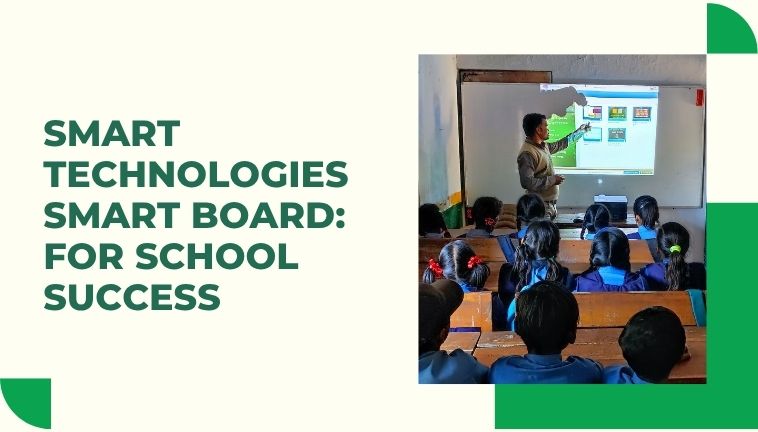
“Technology will never replace great teachers. But in the right hands, it can help great teachers reach every learner.”
That is the real value of a smart classroom.
A smart technologies smart board can make lessons more visual and interactive. However, a screen alone does not change learning. What matters is what happens around it. The content, the teacher, the activities, and the way students take part all matter.
For schools, the question should not be, “Do we have a smart board?”
The better question is, “Are students learning better because of it?”
Smart Technologies Smart Board: Start With the Lesson
A smart board works best when it is part of the lesson, not the lesson itself.
For example, a science teacher can show the human heart on screen. Students can explore each part, watch how blood moves, and answer questions during the lesson. Suddenly, a topic that was once only in a textbook becomes easier to see and understand.
However, this needs the right content.
This is where Schoolnet’s digital learning content and Smart Class solutions can make a real difference. Curriculum-linked content gives teachers useful videos, visuals, activities and learning resources that fit into what students are already studying.
Before choosing or using a smart board, schools should ask:
- Is the content linked to the school curriculum?
- Can teachers find and use it easily?
- Does it encourage students to take part?
- Can it support different learning levels?
A screen with random videos can quickly become a distraction. On the other hand, the right content can turn it into a powerful learning tool.
Smart Technologies Smart Board: Make Students Part of It
One common mistake is simple. The teacher uses the smart board, but students only watch.
That is still better than a blank wall. Yet, it does not use the full power of the technology.
Students should come to the board. They should solve problems, move objects, answer questions, and share ideas. In short, they should do something.
For instance, during a maths lesson, students can solve a problem step by step on the board. Other students can check the answer and suggest a different method. This creates discussion. It also helps teachers see who understands the topic and who needs more support.
Schoolnet’s interactive classroom solutions can help create this kind of active learning. The goal is not to make every lesson digital. Instead, it is to use technology at the right moment.
Sometimes, a five-minute activity can create more learning than a 30-minute presentation!
Technology Needs Teachers at the Centre
Even the best smart technologies cannot work well if teachers do not feel confident using them.
This is why teacher training is not an extra feature. It is essential.
A teacher should know more than how to switch on the board or open a presentation. They should understand how to use digital content, involve students, manage the class and combine technology with normal teaching.
Schoolnet’s teacher training and support programmes focus on helping educators use digital tools in practical ways.
Schools can also follow a simple plan:
- Start with one or two digital activities each week.
- Let teachers share what worked with each other.
- Build a bank of useful lessons and resources.
- Track student participation.
- Improve based on classroom feedback.
Small steps often work better than trying to change everything at once.
Connect the Smart Board to the Bigger Learning Picture
A smart board should not work alone.
What happens after the lesson? Did students understand the topic? Do they need more practice? Can teachers track progress?
This is where a complete learning system becomes important.
Schoolnet’s Learning Management System, assessments and digital content can help connect different parts of the learning journey. Students learn through content, practise through activities, and teachers can use assessments to understand progress.
As a result, technology becomes more than a classroom display. It becomes part of a connected learning experience.
This approach can also help schools use their investment better. Instead of buying different tools that work separately, schools can build a system where learning, teaching, content and assessment support each other.
Measure Success Beyond Screen Time
A smart board being switched on for six hours does not mean it was used well.
Schools need to look at what changed.
Some useful questions include:
- Are more students taking part in lessons?
- Are difficult topics easier to understand?
- Are teachers using digital content with confidence?
- Has student interest improved?
- Are learning outcomes getting better?
These answers can help schools improve how they use technology over time.
Schoolnet’s digital classroom and ICT learning solutions are designed with this larger goal in mind. The focus is not just on providing technology. It is about creating learning experiences that work in real classrooms.
The Real Measure of Success
The future of schools will include more technology. That is certain.
However, the real winners will not be the schools with the biggest screens or the most devices. They will be the schools that use technology with purpose.
A smart technologies smart board can open new ways to teach, explain, explore and create. Yet, its real value appears when the teacher feels confident, the content fits the lesson, and students become active participants.
That is when technology stops being something students simply look at.
It becomes something that helps them learn, think, and grow.

Social Media Links


