Blogs
Future of Smart Classrooms: What Schools Must Rethink Now

A classroom with a smart board does not automatically become a smart classroom. That idea worked a decade ago. Today, it does not. As schools across India and beyond invest in digital tools, one question matters more than ever. Are we using technology to improve learning, or just to modernise the room truly? The future of smart classrooms is not about adding more screens. It is about rethinking how learning happens every single day.
Future of smart classrooms starts with learning, not hardware
For many schools, the first step into smart classrooms was hardware. Boards were installed. Devices were purchased. Software followed. Yet, in many cases, teaching stayed the same. The teacher spoke. Students listened. Only the board looked different.
The future of smart classrooms asks schools to pause and rethink this order.
Learning should lead. Technology should follow.
A smart classroom should help teachers explain better, not faster. It should help students think deeper, not just click more. When technology supports clarity, revision, and feedback, learning becomes active. Otherwise, it becomes noise.
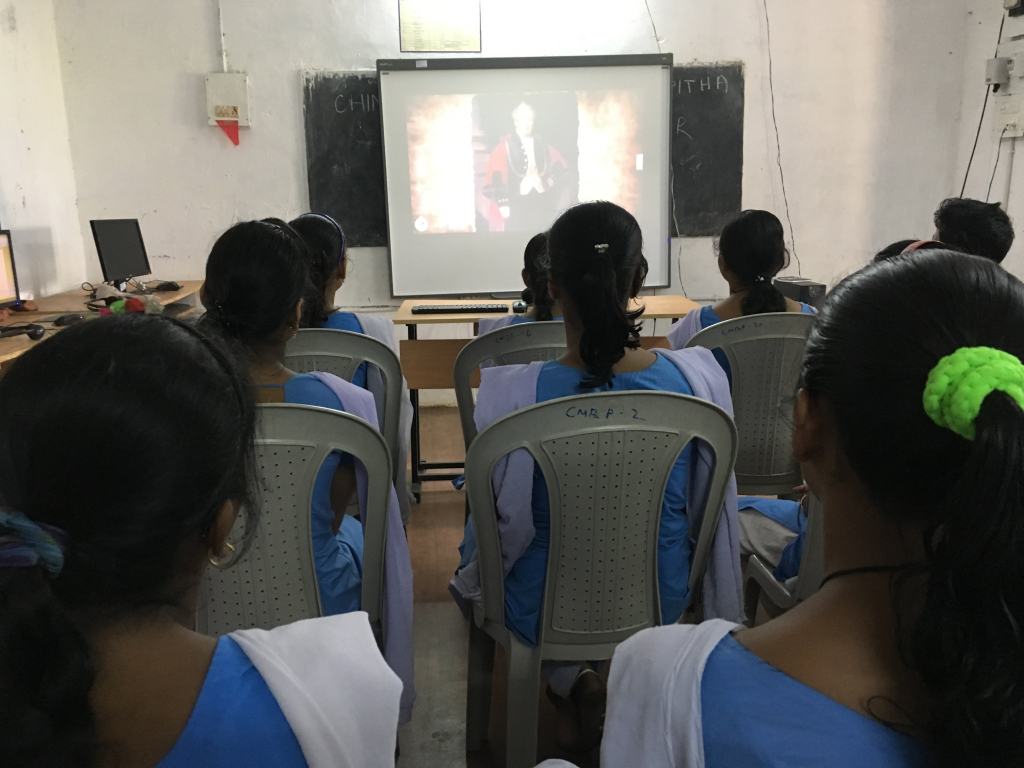
Future of smart classrooms depends on teacher confidence
A common truth is often ignored. Technology only works when teachers feel comfortable using it.
The future of smart classrooms is deeply linked to teacher confidence. Not training once. But training often. Not just how to use tools, but how to teach with them.
When teachers can:
- Explain concepts visually
- Check understanding instantly
- Adjust pace based on student response
- Revisit difficult topics easily
Classrooms change. Quietly. Powerfully. Technology should reduce teacher effort, not add to it.
Future of smart classrooms is personal, not uniform
Every student learns differently. Some need repetition. Some need visuals. Some need time. Traditional classrooms struggle with this. Smart classrooms, when designed well, do not.
The future of smart classrooms is personal learning at scale.
That means:
- Students can revise at their own speed
- Teachers can see where students are stuck
- Learning gaps are noticed early
- Support becomes timely, not delayed
This is not futuristic thinking. It is practical and possible today.
Smart classrooms must work in every condition
Here is an honest reality. Many schools do not have stable internet. Some have none at all. This should not stop smart learning.
The future of smart classrooms must work in real school conditions, not ideal ones.
Smart classrooms should be reliable even when:
- Internet is slow
- Connectivity drops
- Power is inconsistent
When learning continues despite limitations, technology earns trust.
Future of smart classrooms depends on better questions
Instead of asking, “Which smart board should we buy?” schools should ask how will:
- This improve student understanding?
- It help teachers teach better?
- Learning continue every day, not just during demos?
The future of smart classrooms is built on better questions, not bigger budgets.
Schoolnet is leading the future wave of smart classrooms
At Schoolnet, smart classrooms are not treated as installations. They are treated as learning ecosystems. The focus is always on outcomes. Better understanding. Confident teachers. Engaged students.
Schoolnet works closely with schools to ensure technology fits classroom realities, supports teachers, and strengthens learning, even in low-connectivity environments.
Conclusion
The future of smart classrooms is not loud. It is thoughtful, reliable and it is deeply human.
Schools that rethink smart classrooms today are not chasing trends. They are building stronger learning foundations for tomorrow.
And that makes all the difference.

Social Media Links


