
Blogs
tag: Schoolnet India
Home /
Schoolnet India
February 27, 2026
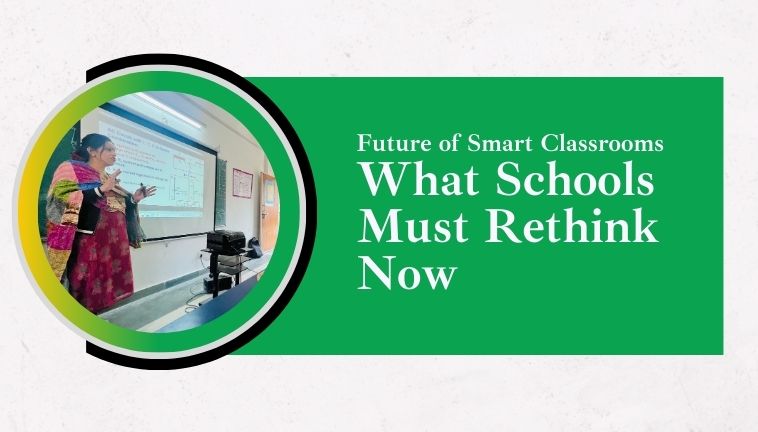
Future of Smart Classrooms: What Schools Must Rethink Now
A classroom with a smart board does not automatically become a smart classroom. That idea worked a decade ago. Today, it does not. As schools across India and beyond invest in digital tools, one question matters more than ever. Are we using technology to improve learning, or just to modernise the room truly? The future of smart classrooms is not about adding more screens. It is about rethinking how learning happens every single day. Future of smart classrooms starts with learning, not hardware For many schools, the first step into smart classrooms was hardware. Boards were installed. Devices were purchased. Software followed. Yet, in many cases, teaching stayed the same. The teacher spoke. Students listened. Only the board looked different.
Read More ⟶
February 18, 2026
Digital Classrooms: The Shift Schools Can’t Ignore
A classroom today looks very different from one a decade ago. Screens are common, devices are visible, but real learning change is still rare. That is the problem. Digital classrooms are not about adding technology. They are about changing how learning happens. And schools that miss this shift risk falling behind. What Digital Classrooms Really Mean? Let’s clear one thing first. Digital classrooms are not smart boards. They are not tablets. They are not online videos. Digital classroom s are a system. A system where teaching, learning, and feedback work together in real time.
Read More ⟶
February 9, 2026
Advantages of Digital Learning for Better School Outcomes
Schools today are surrounded by content. Books, videos, apps, worksheets. Yet learning outcomes still vary widely. That is because outcomes do not improve just by adding more material. They improve when teaching becomes clearer, progress becomes visible, and support reaches students on time. This is where the advantages of digital learning for better school outcomes begin to matter. Not as a trend. Not as a buzzword. But as a daily academic support system inside schools. Why school outcomes need a different approach now? Most schools face the same challenge. Classrooms are diverse. Learning levels vary. Teachers work hard, but tracking every student closely is difficult. By the time exams reveal gaps, it is often too late to fix them.
Read More ⟶
January 7, 2026
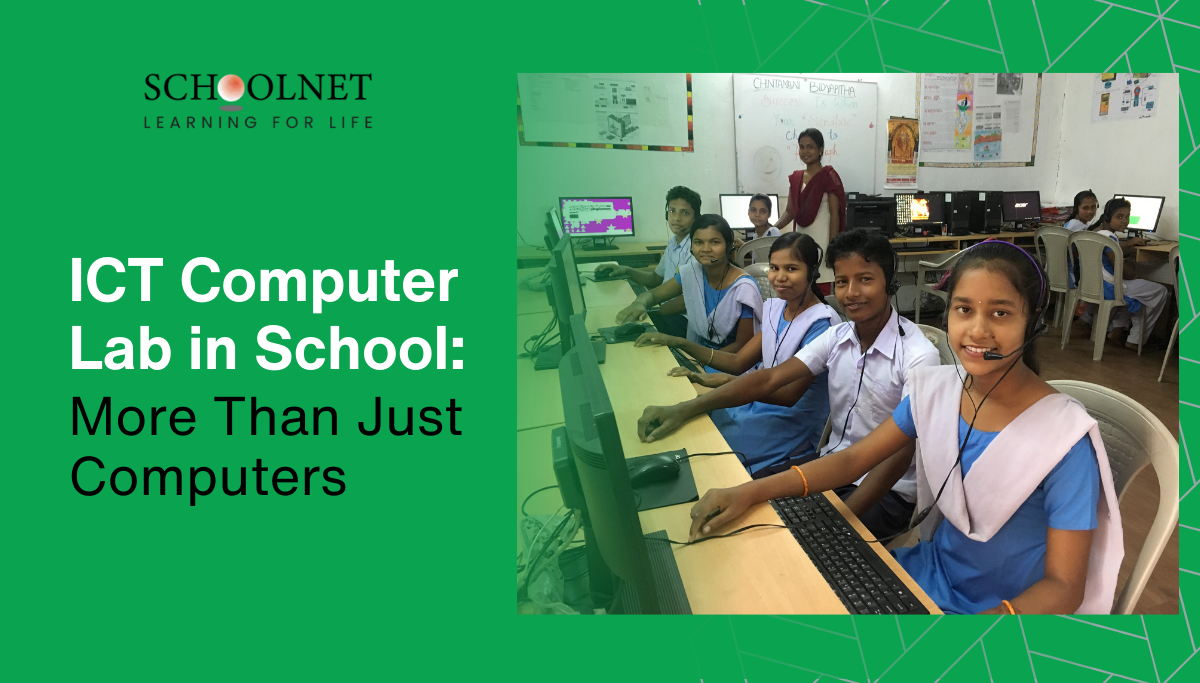
ICT Computer Lab in School: More Than Just Computers
An ICT computer lab in school is often seen as a room filled with machines. However, its real value lies in how students use those machines to think, explore, and solve problems. When planned well, a computer lab becomes one of the most effective learning spaces in a school, supporting skills that go far beyond basic computer use. Many schools already have ICT labs , but in practice, these spaces are used only occasionally and often follow repetitive routines. Students complete assigned tasks, but meaningful learning does not always happen. This is where schools need to rethink the role of the ICT computer lab in schools. The Purpose of an ICT Computer Lab in School
Read More ⟶

October 27, 2025
Digital Classroom: The Smartest Investment for Schools
Technology has changed how we live, work, and even think. So, why should learning stay the same? A few years ago, classrooms were full of chalk dust, heavy books, and silent walls. Today, those walls talk back. Welcome to the world of the Digital Classroom, where learning feels alive, fast, and full of energy! What Makes a Digital Classroom So Powerful? Let’s start simple. A Digital Classroom is not just about fancy screens or gadgets. It’s about using technology to make learning more engaging, personalized, and effective. In a digital classroom, every student learns at their own pace, whether it's fast or slow, through visual or hands-on methods. And teachers? They get superpowers! Technology helps them understand where each student stands, what they need, and how to help them better. Here’s why schools are shifting fast:
Read More ⟶

October 15, 2025
Hybrid Learning in Digital Classrooms: A Fresh Perspective
When classrooms turn into creative studios, and lessons happen across screens and spaces, you know education has changed for good. That’s Hybrid Learning in motion: flexible, human, and quietly revolutionary. Across the world, educators are rethinking how to teach and how students learn. And instead of asking “online or offline?”, they’re now asking, “Why not both?” The result is a model that doesn’t just deliver knowledge; it builds connections, fosters adaptability, and fosters lifelong learning.
Read More ⟶

June 6, 2020
Sustainable Human Capital Development: Yuva Unstoppable Case Study
Sustainable human capital development begins with creating opportunities for people to build the knowledge, skills, and capabilities they need to participate in society and contribute to long-term development. In education, this means looking beyond access to schooling and examining the conditions that help students learn, teachers teach effectively, and schools deliver meaningful educational experiences. The partnership between Yuva Unstoppable and Schoolnet India offers a case study of how interventions at the school level can contribute to this objective. Yuva Unstoppable, an NGO working with schools in India, has supported initiatives in areas such as hygiene, sanitation, student mentoring, and technology-enabled education. One of its initiatives, the Smart Classroom programme, focused on upgrading school environments with educational technology. Examining this intervention provides a useful starting point for understanding how school infrastructure, learning resources, and implementation partnerships can contribute to education development. Understanding Human Capital Development Through Education Human capital development refers to strengthening people's knowledge, abilities, skills, and capabilities over time. Education plays an important role in this process by providing opportunities for learning, personal development, and future participation in the workforce.
Read More ⟶


