Blogs
Advantages of Digital Learning for Better School Outcomes

Schools today are surrounded by content. Books, videos, apps, worksheets. Yet learning outcomes still vary widely. That is because outcomes do not improve just by adding more material. They improve when teaching becomes clearer, progress becomes visible, and support reaches students on time. This is where the advantages of digital learning for better school outcomes begin to matter. Not as a trend. Not as a buzzword. But as a daily academic support system inside schools.
Why school outcomes need a different approach now?
Most schools face the same challenge. Classrooms are diverse. Learning levels vary. Teachers work hard, but tracking every student closely is difficult. By the time exams reveal gaps, it is often too late to fix them.
Digital learning helps schools shift from reaction to prevention. When learning happens through structured digital systems, schools gain early signals. They can see which concepts are weak, which students are struggling, and where teaching support is needed. This visibility changes everything.
That is one of the biggest benefits of digital learning. It turns learning from guesswork into informed action.
How digital learning supports teachers, not replaces them?
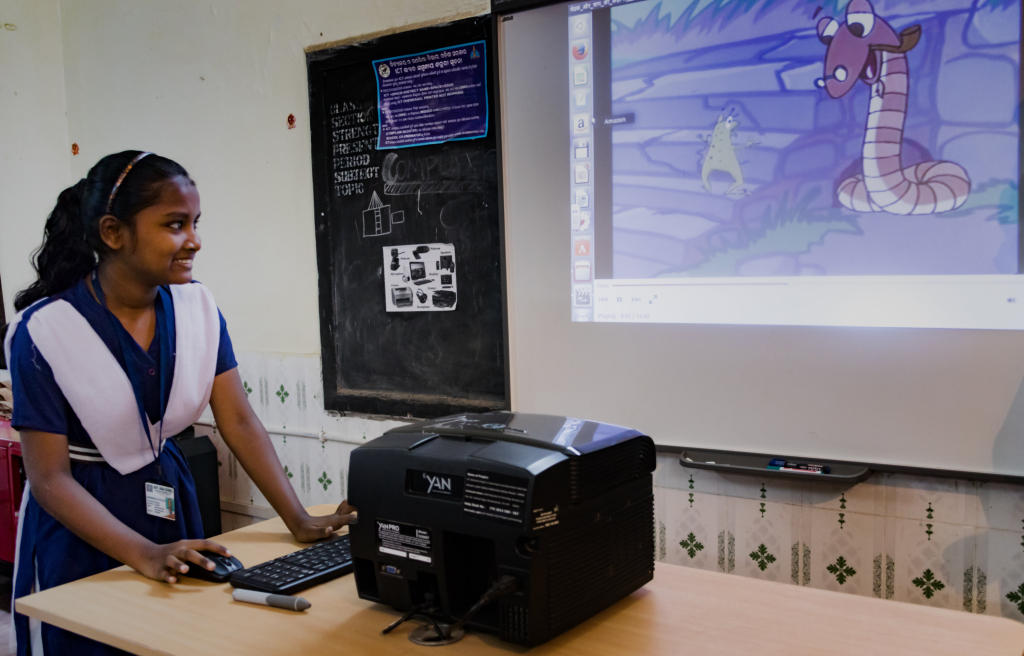
Good outcomes always start with good teaching. Digital learning works best when it strengthens teachers instead of adding pressure.
With the right digital system in place, teachers get access to lesson plans, assessments, and reports that align with the curriculum they already teach. This reduces time spent on preparation and checking, and increases time spent on explanation and interaction.
Teachers also get clear insights into student understanding. Instead of waiting for exams, they can identify gaps early and respond faster. Over time, this leads to more confident teaching and more consistent learning across classrooms.
These practical advantages of digital learning directly reflect in school outcomes.
Advantages of digital learning in mixed-ability classrooms
Every classroom has fast learners, average learners, and those who need more time. Teaching at one pace rarely works for all.
Digital learning allows flexibility without disrupting classroom flow. Students can revisit lessons, practice more, or move ahead based on their needs. At the same time, teachers can track individual progress without singling students out.
This balance supports inclusion quietly and effectively. Students feel supported instead of labelled. Schools see improved participation, reduced learning gaps, and stronger subject understanding over time.
Better outcomes need better assessment, not more tests
Schools often test frequently, but testing alone does not improve learning. What matters is how assessment results are used.
Digital learning helps schools move from marks to meaning. Assessments can be aligned to learning outcomes and analysed instantly. Teachers can see patterns instead of just scores. School leaders can see trends across grades and subjects.
This consistency helps schools make timely academic decisions. It also creates a shared understanding of progress among teachers, students, and parents.
Digital learning strengthens school leadership decisions
School outcomes are shaped by leadership as much as classrooms. Digital dashboards help principals and management teams understand what is working and what needs support.
Instead of relying only on feedback or inspections, leaders can use real data to guide decisions. This leads to focused interventions, better teacher support, and calmer academic environments.
Calm systems perform better. And digital learning helps build those systems.
What digital learning cannot do alone?
Digital learning is not a shortcut. It does not improve outcomes without planning, training, and alignment. Random tools create noise, not results.
The real advantages of digital learning appear when schools choose structured, curriculum-aligned systems that support teaching, assessment, and monitoring together.
Schoolnet’s role in enabling better school outcomes
Schoolnet works with schools to implement digital learning as an academic system, not a standalone tool. The focus remains on curriculum alignment, teacher enablement, and measurable outcomes.
By helping schools integrate teaching, assessment, and analytics into one learning flow, Schoolnet supports better decisions at every level. Classroom, teacher, and leadership.
The real conclusion
Better school outcomes come from clarity, consistency, and timely support. Digital learning enables all three when used well.
That is the real advantage.

Social Media Links


